Shooting yourself in the foot with in-house video production?

So you want to show how your tech works, maybe for internal engineering analysis or to impress an external stakeholder. Your first response might be to use a smartphone camera because they are handy and can produce impressive results.
This approach can work but it assumes that:
a) It's an adequate tool for the job
b) You know how to shoot with it
Let's consider if those assumptions hold true, so you can decide whether to shoot the video yourself or hire a producer.
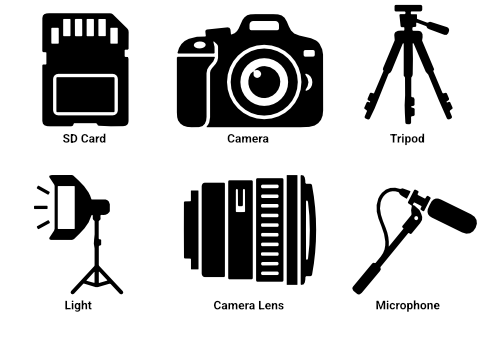
What equipment is needed for a basic video shoot?
Lights: Provide clarity by boosting exposure when natural or artificial light levels are low. Not doing this may result in dull, noisy images.
Grip: Mounting on tripods, etc., stabilises the footage, reducing blurriness from handheld camera-shake.
Lens: Determines the focal distance and field of view, which affect how far you are from the subject, how much of it will be visible and in focus. Large objects require a wider lens, but this can result in distortion. Too narrow and your subject may be cropped. A range of quality lenses is ideal.
Camera: The recording device needs to have adequate resolution to capture the level of detail required. Greater resolution provides more flexibility but rapidly reduces storage. To mitigate this, consumer products (like smartphones) compress the footage (but this reduces quality somewhat, limiting your options later).
Storage: Make sure the recording device or external disk has enough free capacity to store all the footage you want to capture with it. Without careful planning, you may shoot more footage than expected and run out of space. Video has a high data rate that uses a lot more storage than other media.
Microphone: Sound may not be required unless you are recording people, but if you are using the on-board mic, it may result in muted or lost dialogue so record that audio with an external microphone.
It’s worth noting that a smartphone is not a dedicated filming device, it’s more like a multitool - versatile but not specialised. Whereas a professional camera is comparable to a scalpel - designed with a specific purpose.
Whatever tools you decide to use, you will also need to consider how you communicate what you shoot as well as what you shoot it with...
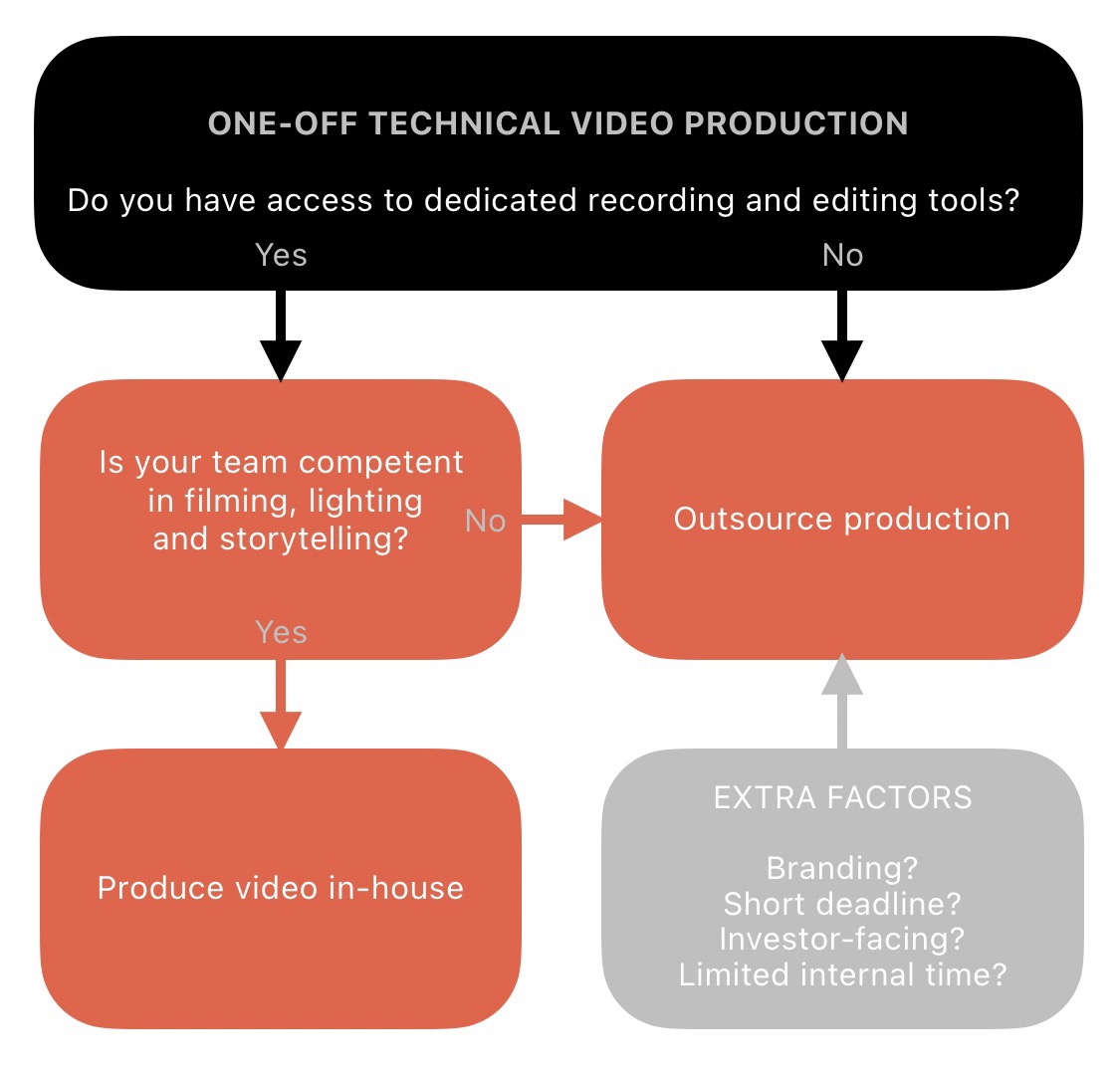
What is involved in basic videography?
Whether documenting the performance of your product for internal analysis or promoting it externally, you are involved in some form of communication. To be effective, this requires an understanding of storytelling techniques (even if the movie is silent). Here are some typical considerations that can apply to such factual filmmaking:
Subject: Identifying and maintaining interest in the topic.
Composition: Arranging the image visually to favour the point of interest, especially if the subject is in motion.
Audience: Having empathy for the audience’s level of prior knowledge and interest in the subject.
Scene: Arranging the setting with sympathy for the subject (avoiding distractions or inappropriate content).
Duration: Portraying the subject within an appropriate time.
Framerate: Exposing enough images per second to to fully capture the motion to show or study all the action required .
Angles: One angle may not be enough to capture all the action so retakes may be required.
Takes: It is unusual to get a perfect performance the first time so prepare for setups and reruns.
While these are some of the most important things to think about while filming, this list is not exhaustive. Additionally, it doesn’t cover the post-production process, which includes essential elements such as editing.
Are you really satisfied that your team has got the tools and the talent to go down the DIY route? Perhaps this thinking is skewed by the desire to save time/money. After all:
Owning a camera doesn’t make one a filmmaker anymore than owning a rocket makes one a rocket scientist.
Let's look at the hidden costs that may be at work:
Learning curve - it can take from 3 days to 3 years to learn the basics on a video production course.
Opportunity cost - is this the highest priority and best use of your time or a distraction from your core business?
Scope creep - internal projects often expand due to a lack of constraints and a clear brief.
Objectivity - will judgement be impaired by subjectivity or improved by an independent perspective?
Internal politics - will your team be confident enough to offer constructive criticism or reluctant to say what they really think?
At Sound Motive we have had the privilege of reviewing in-house footage that clients have shared with us. Sometimes it is ok and sometimes the footage is hard to watch (shaky, dark, blurry, cropped and off-axis). But we always ask: is it fit for purpose? And we encourage you to do the same. By all means experiment, just do so when you can afford to fail.
To discuss having your project filmed professionally - contact us.